

Panamanian Golden Frog Day | Smithsonian’s National Zoo and Conservation Biology https://nationalzoo.si.edu/conservation/news/panamanian-golden-frog-day
We’re exploring a wildly new way to book your Zoo Passes.
Always free of charge, the Smithsonian’s National Zoo is one of Washington D.C.’s – The Zoo instills a lifelong commitment to conservation through engaging experiences
We’re exploring a wildly new way to book your Zoo Passes.
Tricia Rowlison is a research specialist at the Smithsonian Conservation Biology Institute’s Center for Species Survival. Rowlison’s research focuses on investigating sperm maturation in the domestic cat model. Specifically, she is analyzing the secretion of small vesicles within the male’s reproductive tract, termed „epididymosomes.“
We’re exploring a wildly new way to book your Zoo Passes.
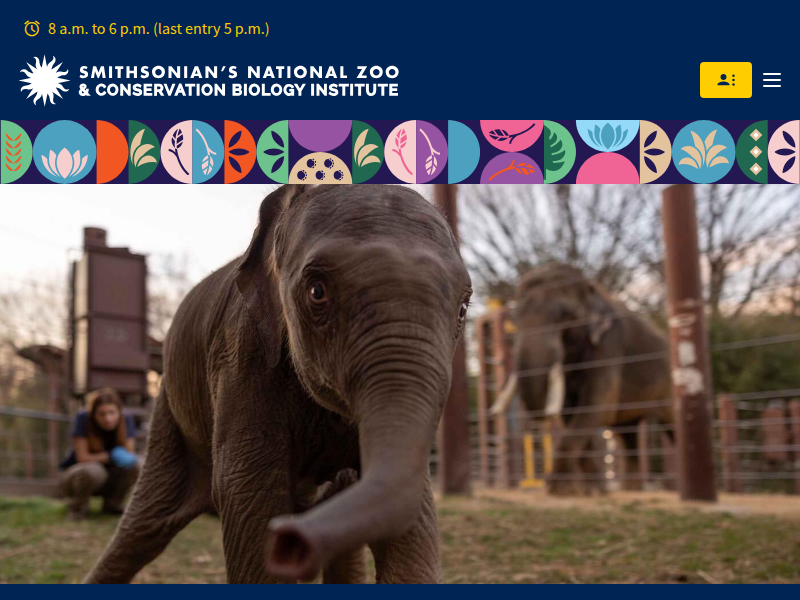
Get the latest scoop on Asian elephant Spike from animal keeper Amanda Bobyack.
We’re exploring a wildly new way to book your Zoo Passes.
Earlier this week, the 2-week-old cheetah cub we are temporarily hand-raising received a clean bill of health from the veterinary team! Get the full cubdate from biologist Adrienne Crosier.
We’re exploring a wildly new way to book your Zoo Passes.
Among the largest species of cats in the world, tigers are powerful hunters with sharp teeth, strong jaws and agile bodies. They range across Asia from Russia all the way to Sumatra and mainland Southeast Asia. Scientists still have much to learn about these beautiful, endangered cats.
We’re exploring a wildly new way to book your Zoo Passes.
An elegant, graceful antelope (which may be behind the legend of the unicorn), the scimitar-horned oryx is supremely adapted to desert life. Currently extinct in the wild, conservation scientists are working on reintroduction programs in Tunisia, Chad and Niger.
We’re exploring a wildly new way to book your Zoo Passes.
Look at these pictures of the cubs the keepers got this week. The keepers can already tell which markings they’ll use to tell the cubs apart.Can you find one or two distinctive markings to distinguish one from the other?
We’re exploring a wildly new way to book your Zoo Passes.
Giant panda keeper Marty Dearie shares that the Zoo’s 6-week-old cub is starting
We’re exploring a wildly new way to book your Zoo Passes.
Banded leporinus are torpedo-shaped, striped yellow and black freshwater fish found primarily in the creeks and streams of the Amazon River basin in Brazil, Colombia and Venezuela where they feed on plants, fruits and leaves.
We’re exploring a wildly new way to book your Zoo Passes.